

If you’ve ever tried recreating a salon-style blowout at home, you already know that the right tool can completely change the experience. Two styling tools that often get compared are the thermal brush and the hot air brush.
At first glance they look similar—both have a brush-like shape and both use heat to style hair. But the way they work is actually quite different, and each one serves a specific purpose in a hair routine.
A thermal brush is mainly designed for shaping and smoothing dry hair, while a hot air brush combines airflow and heat to dry and style damp hair at the same time.
If you’re trying to decide which tool fits your routine better, understanding how each one works will make the choice much easier.
What Is a Thermal Brush?
A thermal brush is essentially a heated styling brush used to smooth, shape, and add movement to hair that is already dry. Instead of blowing hot air, the brush itself heats up and transfers heat through the barrel.
Because of this design, thermal brushes are often used to refresh a blowout, tame frizz, or add bounce and shape to the ends of the hair.
Most models use materials like ceramic or tourmaline to distribute heat evenly, which helps reduce hot spots and keeps styling more controlled.
Best For
-
Touching up a previous blowout
-
Adding soft curves or movement to the ends
-
Creating volume near the roots
-
Smoothing flyaways on dry hair
How It Works
Once the brush heats up, you guide it through sections of hair just like you would with a round brush. The heated barrel shapes the hair while the bristles keep it aligned and smooth.
Since there’s no airflow involved, thermal brushes are only meant for dry hair. They’re ideal when you want quick styling without starting from freshly washed hair.
What Is a Hot Air Brush?
A hot air brush, sometimes called a blow dryer brush, works differently. Instead of just heating the barrel, it pushes warm air through the brush while you style.
That means it functions as both a hair dryer and styling brush in one tool, allowing you to dry and shape your hair at the same time.
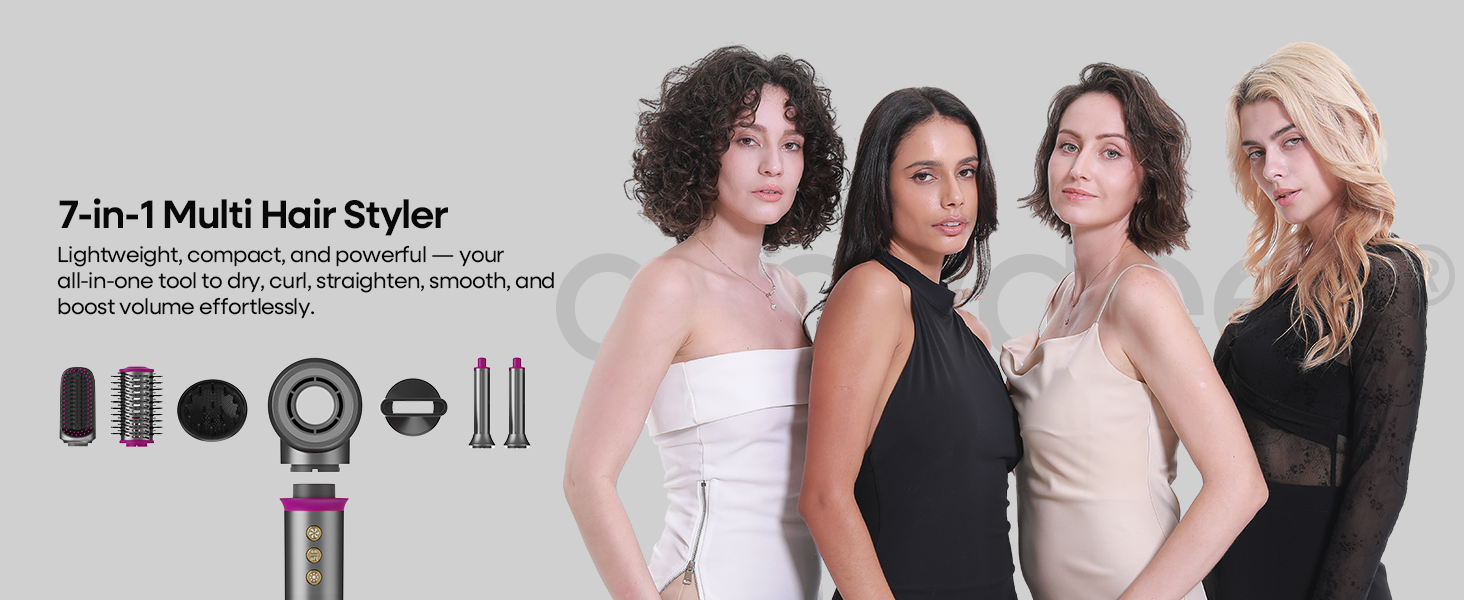
Newer multi-styling systems go even further. Some include interchangeable attachments—such as curlers, smoothing brushes, and diffusers—so you can create multiple styles using one device.
For example, a 7-in-1 hot air styling system might include:
-
Auto-wrap curling barrels
-
A volumizing round brush
-
A smoothing brush
-
A concentrator nozzle for precise drying
-
A diffuser for textured or curly hair
Combined with a high-speed motor (up to 130,000 RPM), these stylers generate strong airflow that can cut drying time significantly while still allowing you to control the shape of your style.
Best For
-
Drying and styling hair simultaneously
-
Creating smooth, voluminous blowouts
-
Reducing the need for multiple styling tools
-
Faster morning routines
How It Works
Hot air brushes push heated airflow through the bristles while you guide the brush through your hair. As the air dries each section, the brush shapes the hair into the style you want.
Many modern stylers also include negative ionic technology, which helps neutralize static and smooth the hair cuticle, leaving hair shinier and less frizzy.
Some advanced tools even use airflow styling techniques similar to the Coanda effect, which allows curling barrels to automatically wrap sections of hair around the attachment.
Thermal Brush vs Hot Air Brush: Key Differences
While both tools help shape and smooth hair, their main difference comes down to when and how they’re used.
Thermal Brush
-
Works only on dry hair
-
Uses a heated barrel without airflow
-
Best for touch-ups and reshaping styles
-
Great for adding bounce or smoothing frizz
Hot Air Brush
-
Works on damp or slightly wet hair
-
Uses heated airflow to dry and style simultaneously
-
Can replace both a blow dryer and styling brush
-
Often includes multiple attachments for different styles
If your routine usually starts with freshly washed hair, a hot air brush tends to be the more practical choice.
Which Tool Should You Choose?
The right tool ultimately depends on your styling habits.
If you typically style your hair after it’s already dry, a thermal brush can be useful for quick touch-ups and adding shape.
But if you want a tool that can take hair from damp to fully styled, a hot air brush offers much more versatility.
Modern multi-stylers make the process even easier by combining several tools in one device. With attachments for curling, smoothing, volumizing, and diffusing, you can experiment with different hairstyles without filling your bathroom drawer with separate tools.
Features like smart temperature control, which regulates heat levels to help prevent excessive damage, also make these tools safer for everyday use.
Final Thoughts
Both thermal brushes and hot air brushes can help you achieve smooth, polished hair—but they’re designed for different stages of your styling routine.
A thermal brush is perfect for refining and reshaping dry hair, while a hot air brush acts as a complete styling solution that dries and styles simultaneously.
If convenience and versatility are priorities, a multi-functional hot air styler can simplify your routine while still delivering that soft, bouncy blowout look many people aim for.
The right styling tool doesn’t just save time—it can completely transform the way you approach your daily hair routine.